Boiler Training and Maintenance in Kenya: Keeping Your Boiler Safe, Reliable and Compliant
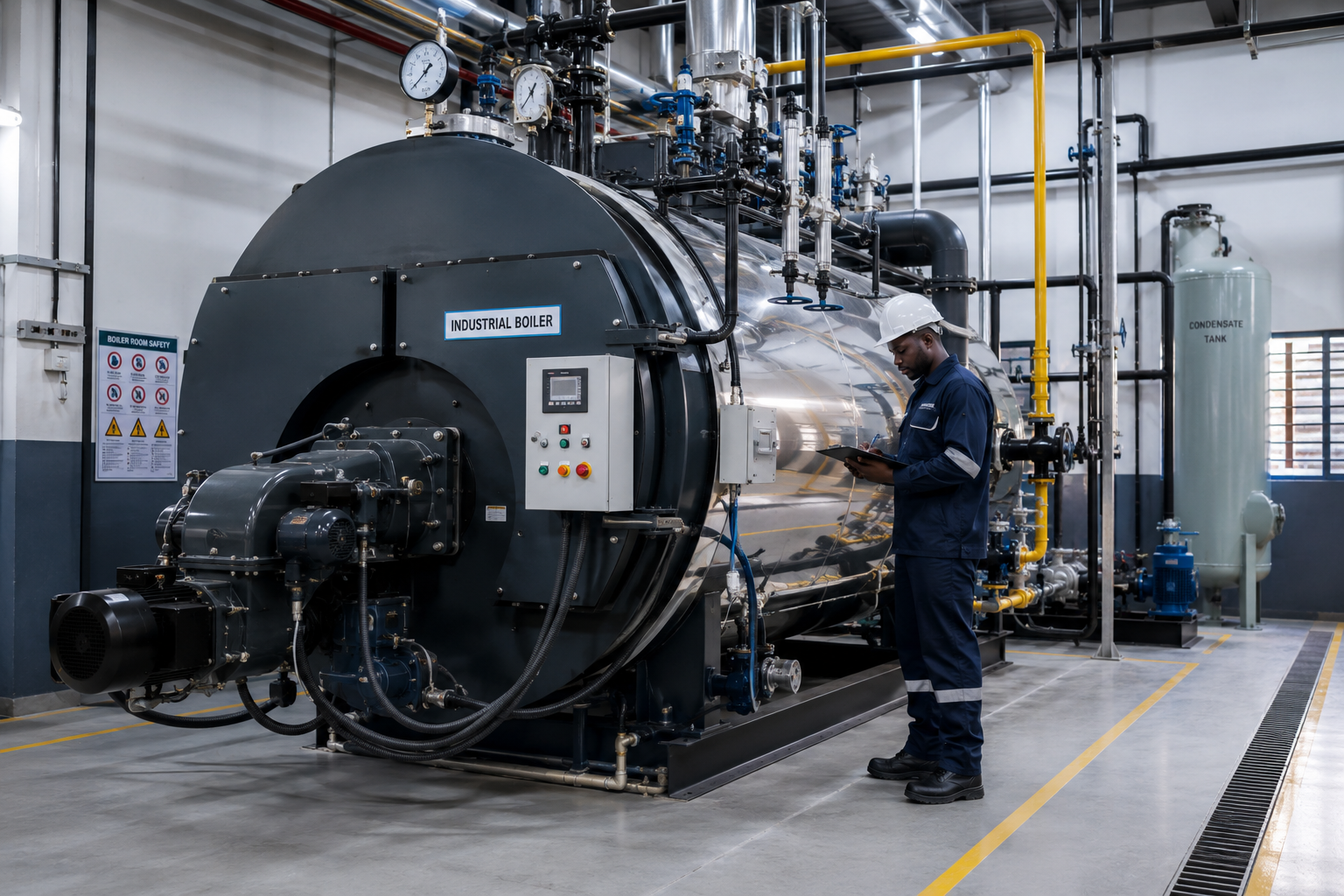
A boiler breakdown doesn't just mean a repair bill.
For businesses that depend on steam or heat for production, an unexpected boiler failure can mean unplanned downtime, delayed orders, lost productivity, emergency repair costs and increased safety risks.
And while regular maintenance can help prevent costly breakdowns, maintaining a boiler safely also depends on having competent people who understand how to operate, monitor and maintain the equipment.
This is why boiler training, preventive boiler maintenance and statutory boiler inspection should form part of an organization's overall approach to workplace safety and operational reliability.
For businesses operating boilers in Kenya, the goal is not simply to keep the equipment running. It is to keep it safe, reliable, properly maintained and operated by competent personnel.
Why NITA-Approved Boiler Operator Training Matters
Operating an industrial boiler requires more than knowing how to switch the equipment on and off.
A boiler operator needs to understand the equipment, its controls, operating conditions, hazards and the correct procedures to follow during normal operations and emergencies.
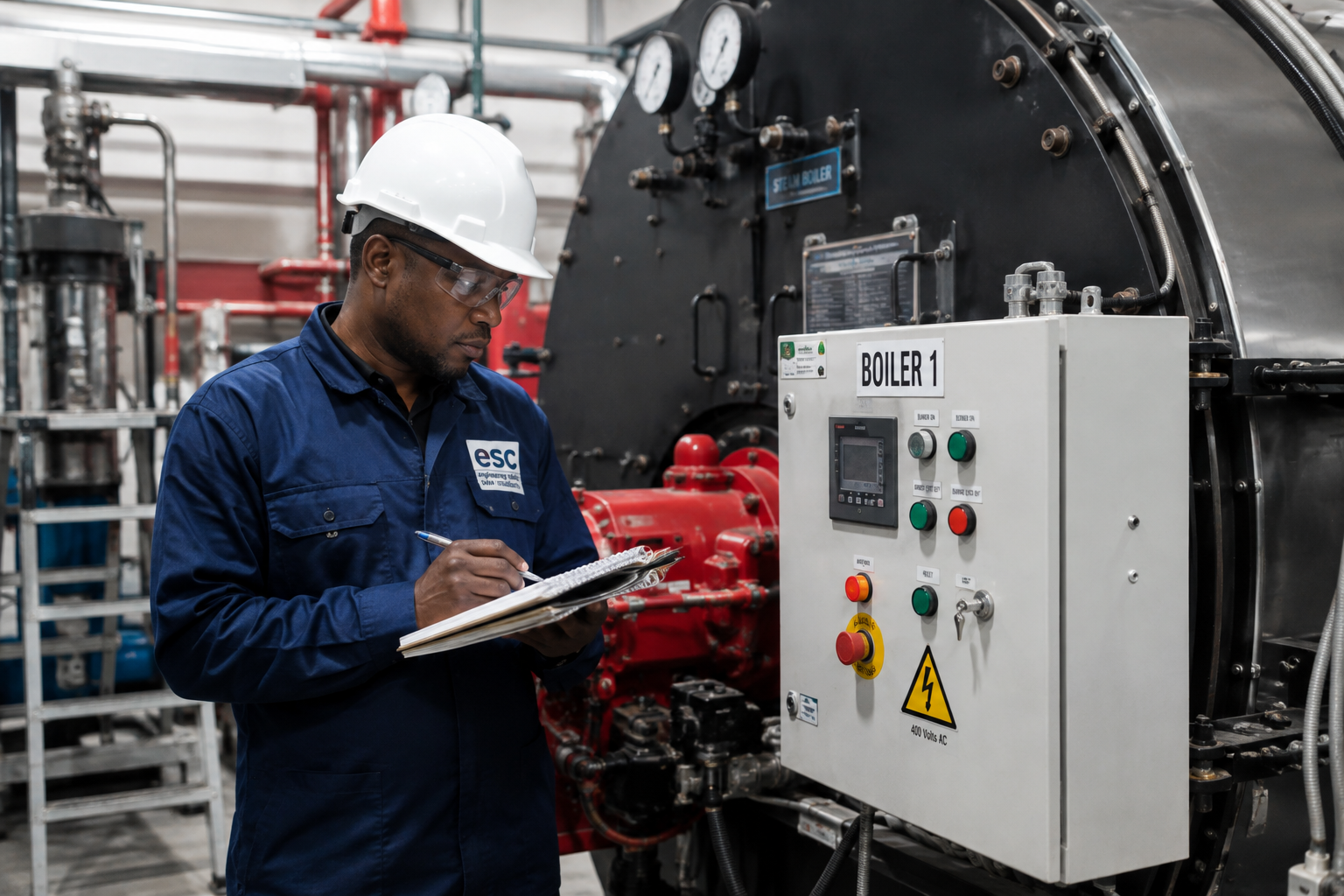
Without adequate boiler operator training, workers may be more likely to:
- Follow incorrect start-up or shutdown procedures
- Misinterpret pressure or temperature readings
- Fail to recognize abnormal operating conditions
- Respond incorrectly to equipment faults
- Overlook developing maintenance issues
- Follow unsafe practices around steam, pressure and hot surfaces
- Fail to respond appropriately during emergencies
- Miss important workplace safety and compliance requirements
This is why organizations looking for boiler training in Kenya should consider more than whether a provider issues a certificate.
The quality of the training, the competence of the trainers and the practical relevance of the programme all matter.
What Does NITA-Approved Boiler Training Cover?
Engineering Safety Consultants provides NITA-approved Boiler Maintenance and Operation Training designed to give boiler operators, technicians and relevant personnel the knowledge and practical skills required for safe boiler operations.
The training can cover important areas including:
- Boiler fundamentals and operating principles
- Safe boiler operation
- Boiler controls and instrumentation
- Start-up and shutdown procedures
- Combustion efficiency and fuel handling
- Routine boiler maintenance and inspection
- Water treatment and boiler chemistry
- Common boiler faults and troubleshooting
- Emergency response procedures
- Applicable legal and regulatory requirements
At Engineering Safety Consultants, our approach emphasizes practical expertise.
The training is focused on workplace application, helping participants understand how the knowledge and procedures they learn can be applied to actual boiler operations.
Learn more about our NITA-Approved Boiler Maintenance and Operation Training →
Preventive Boiler Maintenance: Don't Wait for a Breakdown
One of the most expensive approaches to equipment maintenance is waiting until something breaks.
When a boiler fails unexpectedly, a business may have to deal with:
- Unplanned production downtime
- Emergency repair expenses
- Delayed customer orders
- Lost productivity
- Increased operating costs
- Equipment damage
- Workplace safety concerns
This is why preventive boiler maintenance is so important.
Regular maintenance allows organizations to monitor equipment condition, identify developing problems and address issues before they become major failures.
For businesses searching for boiler maintenance services in Kenya, the focus should therefore be more than repairing equipment after a breakdown.
A good maintenance programme should support:
Safety + Reliability + Efficiency + Compliance + Business Continuity
Boiler Problems Businesses Should Not Ignore
Some problems may appear minor at first but can indicate that a boiler requires further investigation, maintenance or inspection.
1. Unusual Pressure Changes
Operators should understand the normal operating parameters of their boiler.
Unexpected pressure changes should not simply be ignored. They should be investigated according to the organization's operating and safety procedures.
2. Unusual Noise or Vibration
A significant change in the normal sound or vibration of boiler equipment can indicate an underlying mechanical or operational problem.
3. Increasing Fuel Consumption
If a boiler begins using more fuel without a corresponding increase in production, the organization should investigate the possible causes.
Operating practices, equipment condition and other factors can affect boiler efficiency.
4. Frequent Boiler Breakdowns
If the same boiler keeps breaking down, repeatedly repairing individual faults may not address the underlying problem.
A broader assessment of the equipment, maintenance programme and operating practices may be required.
5. Steam or Water Leaks
Leaks around boiler equipment should not be overlooked.
They can create safety concerns and may indicate deterioration or equipment defects requiring attention.
6. Poor Boiler Room Housekeeping
A boiler room should be maintained as a clean, controlled working environment.
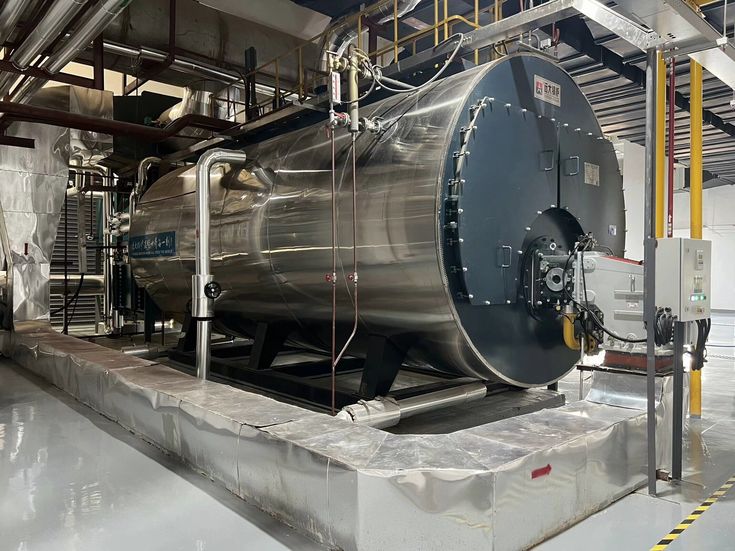
Poor housekeeping can introduce additional workplace hazards and make it more difficult for operators and maintenance personnel to work safely.
Boiler Inspection and Compliance in Kenya
Boiler inspection in Kenya is an important part of responsible boiler management.
Under Section 67 of Kenya's Occupational Safety and Health Act, 2007, every steam boiler and its fittings and attachments are required to be thoroughly examined by an approved person at least once every 12 months, subject to the provisions of the Act, including a possible written extension to a period not exceeding 15 months in specified circumstances.
The Act also provides for examination following modifications or extensive repairs.
This makes statutory boiler inspection an important consideration for organizations operating steam boilers.
Inspection is not simply about obtaining documentation. It can help organizations identify defects, assess equipment condition and maintain evidence that applicable safety requirements are being addressed.
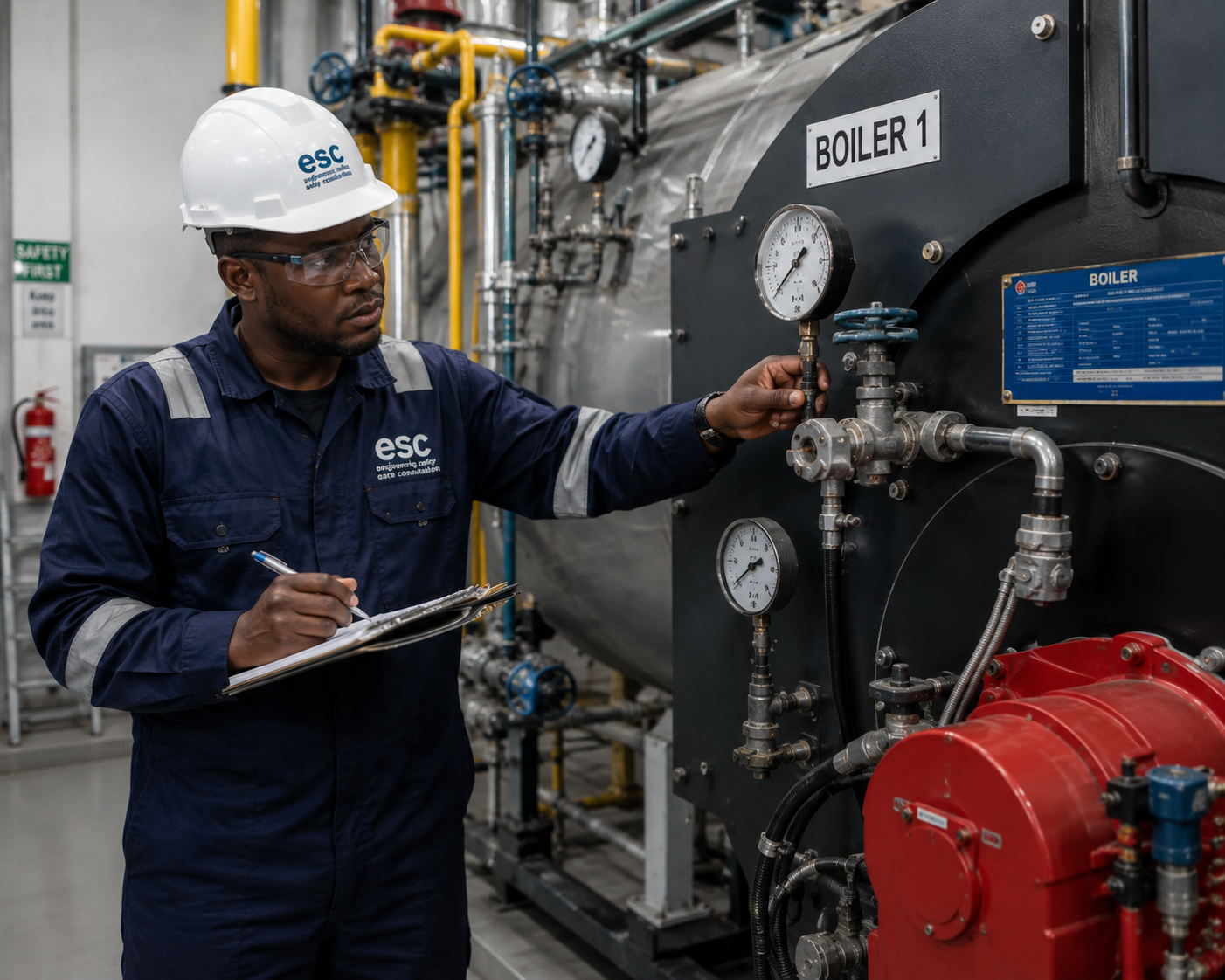
Is Your Annual Boiler Inspection Due?
Don't wait for a breakdown or compliance issue to expose a problem.
Engineering Safety Consultants provides professional plant and equipment inspection services alongside NITA-approved Boiler Maintenance and Operation Training, helping organizations strengthen competence, safety and compliance.
Request Boiler Training & Inspection Support →Boiler Training and Maintenance Should Work Together
It is easy to think of training and maintenance as separate activities.
They are not.
Training helps people operate equipment safely.
Maintenance helps keep the equipment in an appropriate operating condition.
Consider a well-maintained boiler operated by someone who does not understand the equipment, its controls or how to respond to abnormal conditions.
There is still a risk.
Likewise, consider a highly trained operator working with poorly maintained equipment.
There is still a risk.
Effective boiler safety therefore requires both competent people and properly maintained equipment.
For this reason, organizations should take an integrated approach to:
Boiler operation → Maintenance → Inspection → Training → Monitoring → Continuous improvement
The Business Cost of Poor Boiler Management
Boiler safety is not only an HSE concern.
It is also an operational and financial concern.
Unplanned Downtime
A boiler failure can interrupt processes that depend on steam or heat, affecting production schedules and customer commitments.
Higher Operating Costs
Poor operating practices or equipment condition can contribute to inefficient energy or fuel consumption.
Unexpected Repair Costs
Emergency repairs can be more disruptive and expensive than planned maintenance.
Workplace Safety Risks
Boilers involve pressure, heat and other hazards. Workers need appropriate training, procedures and controls to manage these risks.
Compliance Challenges
Organizations need to understand and address applicable requirements relating to boiler examination, maintenance and workplace safety.
Reduced Equipment Reliability
A proactive approach to boiler maintenance and inspection can help identify developing issues before they become major operational problems.
For businesses, therefore, boiler maintenance in Kenya should be viewed as an investment in safety, reliability and business continuity—not simply another maintenance expense.
What to Look for When Choosing Boiler Training in Kenya
When selecting a boiler training provider in Kenya, the cheapest option is not necessarily the best option.
Your provider should be able to demonstrate the technical capability and professional standards required for safety-critical training.
Consider whether the provider offers:
- Competent and technically capable professionals
- NITA-approved training
- Practical, workplace-focused training
- Understanding of Kenyan occupational safety requirements
- Professional documentation and certification
- Responsive communication and follow-up
- Quality and reliable service
- Training tailored to the organization's operational needs
- Ongoing support after the initial service
For safety-critical services, organizations need a provider they can trust—not simply a company that provides a certificate.
Why Choose Engineering Safety Consultants?
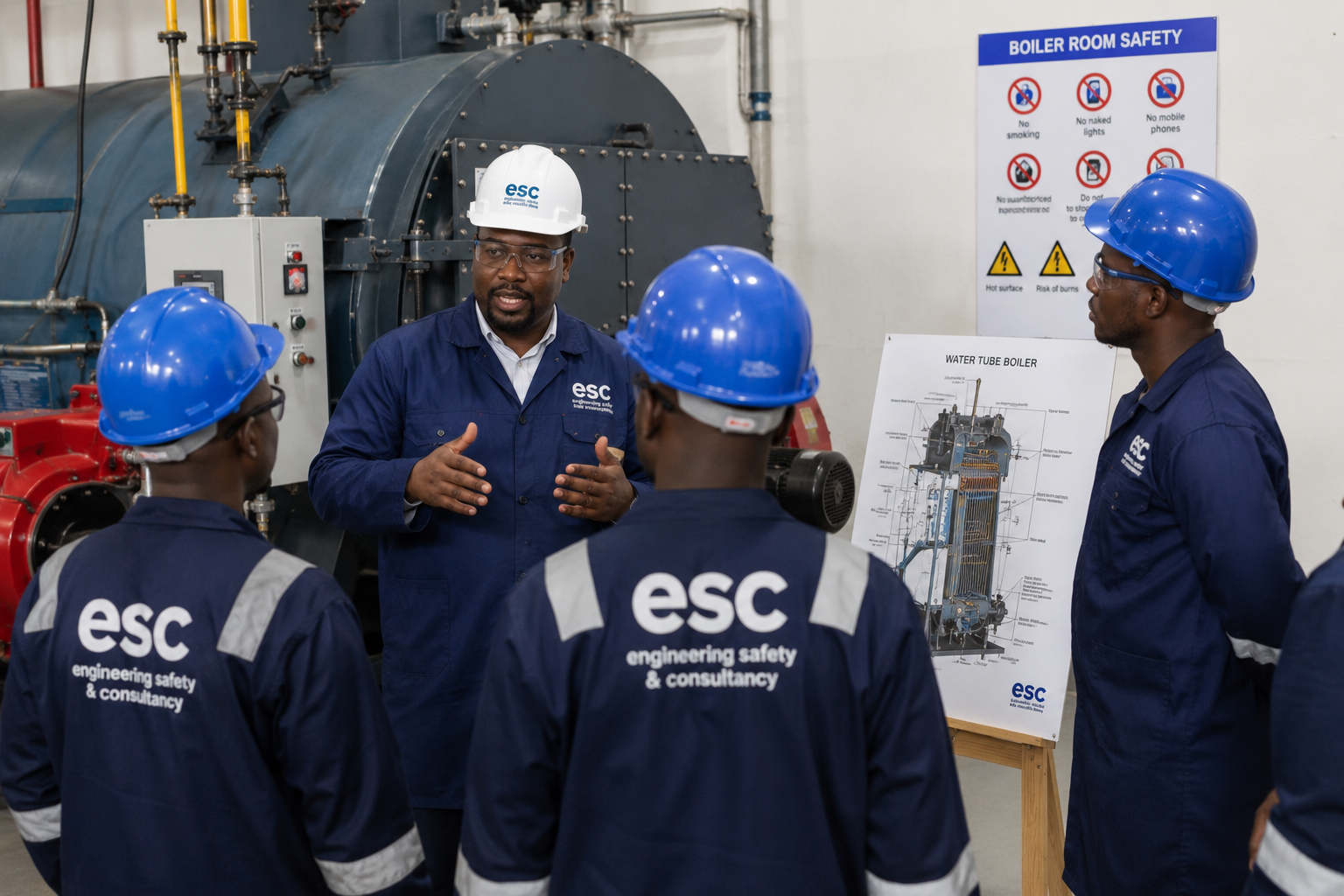
Engineering Safety Consultants takes a practical, technical and compliance-focused approach to workplace safety.
Competent Technical Team
ESC brings together experienced and technically capable professionals across safety, inspection, NDT, training and equipment services.
Approved and Accredited Services
ESC provides applicable approved, accredited and registered services depending on the specific service and regulatory requirement.
For boiler training, our NITA-approved Boiler Maintenance and Operation Training provides organizations with an approved training option for boiler operators and relevant personnel.
Practical Expertise
Our training focuses on workplace application, helping participants understand how knowledge and procedures translate into actual working environments.
Quality Service
We focus on professionalism, accuracy, attention to detail and reliable service delivery.
End-to-End Safety Support
Organizations can access a broader range of safety services through one provider:
Audit → Inspect → Test → Train → Equip → Service
This can reduce the need to coordinate multiple providers for different safety requirements.
Professional Documentation
Clear certificates, reports and service documentation are an important part of professional safety management.
Continuous Support
Our relationship with clients does not have to end once training or inspection is completed.
Follow-ups, servicing, reminders and continued technical support can form part of a longer-term safety relationship.
Beyond Boiler Training: Pressure Equipment Inspection
Boilers are not the only pressure-related equipment that organizations need to manage.
Depending on the facility and operations, businesses may also have equipment such as:
- Air receivers
- LPG tanks
- Storage tanks
- Autoclaves
- Heat exchangers
- Reactors
- Other pressure vessels and plant equipment
This is where working with a technically capable safety provider can be valuable.
Instead of treating boiler training, inspection, testing and other safety requirements as completely separate activities, organizations can work with a provider capable of supporting multiple aspects of their safety programme.
Build Safer and More Reliable Boiler Operations
If your organization operates a boiler, don't wait for a breakdown or safety incident before reviewing your arrangements.
Ask yourself:
Are our boiler operators properly trained?
Are we following an effective preventive maintenance programme?
Can our operators identify abnormal operating conditions?
Are equipment defects reported and addressed promptly?
Are required boiler examinations being completed?
Do we maintain the necessary records and documentation?
Do we have a safety partner who can support us beyond a single training session?
If you are uncertain about any of these areas, it may be time to review your organization's boiler training, maintenance, inspection and safety arrangements.
Need NITA-Approved Boiler Training for Your Team?
Get practical NITA-approved Boiler Maintenance and Operation Training designed to help your team operate and maintain boiler equipment safely.
View Boiler Training →Get NITA-Approved Boiler Training and Maintenance Support in Kenya
Engineering Safety Consultants provides NITA-approved Boiler Maintenance and Operation Training, supported by practical expertise and a broader range of technical safety services.
Whether you are looking for:
- Boiler training in Kenya
- NITA-approved boiler training in Kenya
- Boiler operator training
- Boiler maintenance training
- Boiler safety training
- Boiler operation training
- Steam boiler training
- Boiler inspection in Kenya
- Statutory boiler inspection
- Pressure vessel inspection
- Boiler maintenance services
ESC can help your organization address its training, inspection and workplace safety requirements.
Don't wait for a boiler breakdown to expose a problem that could have been addressed earlier.
Learn more about NITA-Approved Boiler Maintenance and Operation Training →
Frequently Asked Questions About Boiler Training and Maintenance in Kenya
How often should a boiler be inspected in Kenya?
Under Section 67 of the Occupational Safety and Health Act, 2007, every steam boiler and its fittings and attachments must be thoroughly examined by an approved person at least once every 12 months, subject to the provisions of the Act. The Act also provides for a possible written extension to a period not exceeding 15 months in specified circumstances.
Examination is also required following modifications or extensive repairs as provided for under the Act.
Why is boiler operator training important?
Boiler operator training helps workers understand safe operating procedures, identify hazards, monitor operating conditions, recognize abnormal situations and respond appropriately to problems.
Is boiler maintenance necessary if the boiler is working normally?
Yes. Preventive boiler maintenance is intended to identify potential problems before they develop into equipment failures, unsafe conditions or costly operational disruptions.
What is boiler maintenance training?
Boiler maintenance training helps workers understand maintenance requirements, equipment condition, safe maintenance practices and operational considerations associated with boiler systems.
What is boiler safety?
Boiler safety involves the safe operation, maintenance, inspection and management of boiler equipment, together with appropriate procedures, training and controls for workers exposed to boiler-related hazards.
Is the boiler training NITA approved?
Yes. Engineering Safety Consultants provides NITA-approved Boiler Maintenance and Operation Training for organizations seeking practical training for boiler operators and relevant personnel.
Where can I get NITA-approved boiler training in Kenya?
Engineering Safety Consultants provides NITA-approved Boiler Maintenance and Operation Training for organizations seeking practical boiler operation and maintenance training.
View NITA-Approved Boiler Maintenance and Operation Training →